
Reflecting on ActEU – Key takeways from the project

As the ActEU project drew to a close and held its final conference in early February 2026, the project’s researchers discussed the key findings, methodology, innovations, consortium organisation and impact of the research. With: The ActEU Project had two main ambitions. First, it seeked to map and investigate persistent problems of declining trust, legitimacy and […]
Do DIGITAL innovations improve democracy?

In recent years, trust in politics has diminished in many European countries. To counter this phenomenon, a new generation of political movements is trying to find new ways to reconnect with citizens via online interactions. Can these digital innovations really help improve democracy? And can trust be rebuilt online? This Animated Video, created in collaboration […]
How do we COLLECT data on political trust?

How can we measure political trust and legitimacy beyond the usual survey question “how much trust do you have in the parliament?”. Measuring political trust is no easy task, and answers based on surveys do not show us the complete picture. If we further consider that political trust is multilayered – at the local, national, […]
How do we recover political trust?

Watching the news on television or scrolling through social media, it seems that Europe has become a polarised political landscape, where citizens no longer trust politicians and hold increasingly divided views. Is political trust really declining? If so, what can we do to recover it? This TEPSA Animated Explainer, created in collaboration with the ActEU […]
How do we measure political trust?

How can we measure political trust, legitimacy and participation? Our ActEU project looks at the impact of political trust on our democratic systems, but how can we know if trust is declining, increasing, or fluctuating in Europe? This TEPSA Animated Explainer, created in collaboration with the ActEU project, explores the results of the ActEU survey, […]
How do we PARTICIPATE in politics?

Voting, participating in political parties or demonstrations, signing petitions. These are just a few examples of the different ways in which we, citizens, can participate in politics. But how do we decide which types of participation to engage in? This TEPSA Animated Explainer, created in collaboration with the ActEU project, explores the triggers, motivations and […]
Why is populism widespread in Central Europe?

Central Europe has been a frontrunner in the rise of populism in Europe. With more people increasingly supporting populist, illiberal leaders, why is populism so strong in this area? And how does Central European populism differ from that in other regions? This TEPSA Animated Explainer, created in collaboration with the ActEU project, explores the historical […]
WATCH: Are people losing faith in democracy?

Why are people losing faith in the democratic system? How does scepticism impact democracy? And how can we recover people’s trust? In this TEPSA Explainer in collaboration with the ActEU project, Laura Morales, Research Professor at the Consejo Superior de Investigaciones Científicas (IPP-CSIC), explores whether people are losing faith in the democratic system and looks […]
Has climate change scepticism changed politics?

At a time of increasing debate about how to tackle the problems of climate change, what are the consequences for political trust? Do those who are opposed to climate change policies trust less in the political system? This TEPSA Animated Explainer, created in collaboration with the ActEU project, explores the connection between political trust, polarisation, […]
Why is society becoming so divided?

Why is polarisation becoming a key issue in our society? How does it impact democracy? And what can we do to bridge divides? In this TEPSA Explainer in collaboration with the ActEU project, Pelin Musil, Associate Researcher at the Institute of International Relations in Prague, explores the reasons why our societies are becoming so divided. […]
What makes a government LEGITIMATE?

What is political legitimacy? And why does it matter? What makes a democratic government legitimate? What happens when people feel a government is not legitimate? And how does legitimacy influence sense of belonging in a democracy? In this TEPSA Explainer in collaboration with the ActEU project, Daniela Braun, ActEU’s Scientific Lead and Professor at Saarland […]
Can we win against post-truth?

When feelings matter more than evidence and facts, democracy is put under threat. The rise of “alternative facts” in political discourse, the increasing use of AI to fabricate false online content, and the deepening distrust of science and journalism point to a fundamental crisis of the liberal democratic order. In this context, it is easy […]
Who decides how stories are told?

We often hear that “history is written by the winners”, but in today’s contested information age, global powers compete to shape the narratives of international events. How do they do it? And what are the dangers posed by the digitalisation of global politics? This TEPSA Animated Explainer explores the role of digital diplomacy and takes […]
Post-truth and disinformation in 2025

What is the most significant impact of post-truth politics on democracy? How has post-truth politics evolved in recent years? What have governments been doing to counter the impacts of post-truth politics? What could liberal democracies do to further counter post-truth politics? In this TEPSA Explainer in collaboration with the RECLAIM Project, Maximilian Conrad, Principal Investigator […]
Should the EU be tougher on disinformation?

Why have the COVID-19 pandemic and Russia’s invasion of Ukraine been such pivotal moments for Europe? These events not only brought global disruption, but they also caused our digital spaces to be flooded with fake news. With false information on the vaccine and conspiracy theories on Russia’s invasion of Ukraine spreading at a unprecedented speed, […]
What causes political polarisation?

Political polarisation is driven by feelings over facts. This is usually the main narrative. But what if this was not the whole story? What if polarisation was caused by more than just emotions? This TEPSA Animated Explainer focuses on the causes of political polarisation and explores the role of re-description as a reason for polarising […]
Is technology a threat to democracy?

The rise of large-language models (LLMs) has been a pivotal moment in human history. But what are the implications of these technologies for liberal democracies? And how will they impact democratic deliberation in the future? This TEPSA Animated Explainer focuses on the ways in which technological developments have shaped political agendas and the challenges they […]
How can we defend democracy in the post-truth era?

What is the EU’s vision of democracy in the era of post-truth politics? How is it fighting against the dangers of disinformation and political polarisation? And how can it balance regulating online content and upholding democratic values? This TEPSA Animated Explainer focuses on the EU’s strategy to counter the effects of post-truth politics and looks […]
What do people want from the news?

How can journalists minimise the challenges they face in the post-truth era? Do we need to rethink how journalism functions? This TEPSA Animated Explainer, created in collaboration with the RECLAIM project, focuses on what we, as news consumers, want from the media. The video is based on the findings of the RECLAIM publication, “Reinforcing or […]
Is the populist far-right a transnational political force?

Populist far-right parties are rising across Europe, as confirmed in the recent European Parliament elections. But do these parties agree with one another? And can they really be considered a transnational political force? This TEPSA Animated Explainer, created in collaboration with the ActEU project, attempts to respond to these questions. The video is based on […]
What can the EU do about online disinformation?

What can the EU do about online disinformation? How can it regulate Big Tech platforms? And how can it reclaim the digital space for the public good? This TEPSA Animated Explainer, created in collaboration with the RECLAIM project, focuses on the EU’s efforts to regulate Big Tech and combat the spread of online disinformation. The […]
How are people GETTING INVOLVED in politics today?

What are traditional ways of participating in politics? How are new forms of participation changing politics? Why do some people feel their vote doesn’t make a difference? What impact can individual action have on the system? In this TEPSA Explainer in collaboration with the ActEU project, Alexander Hoppe from the University of Duisburg-Essen explains all […]
How are gender equality and democracy connected?

What does gender equality mean in a democratic society? How can democratic representation strengthen gender equality? Why are democracy and gender equality facing backlash? What can be done to support democracy and gender equality? In this TEPSA Explainer in collaboration with the ActEU project, Matilde Ceron, postdoctoral researcher at the University of Salzburg, explores the […]
How has the public sphere changed in the age of post-truth politics?

How has the public sphere changed in the age of post-truth? What makes a society a functioning democracy? And how do online echo chambers impact democratic deliberation? This TEPSA Animated Explainer, created in collaboration with the RECLAIM project, explores how digital media and the spread of fake news threaten the democratic public sphere. The video […]
How do we decide who to vote for?

Has voting behaviour changed in recent years? What factors affect how people vote today? How do major events or crises influence voting decisions? What impact do political campaigns have on voters? In this TEPSA Explainer in collaboration with the ActEU Project, Max-Valentin Robert, Postdoctoral Researcher at the Université Catholique de Lille, explains the factors influencing […]
What news can I trust?

How important is quality journalism in a democracy? What are the biggest challenges facing journalism today? Can we stop the spread of fake news without damaging freedom of speech? How can we reinvigorate demand for quality journalism? In this TEPSA Explainer in collaboration with the RECLAIM Project, Martin Moland, Postdoctoral Fellow at the ARENA Centre […]
Is liberal democracy under threat?

Has liberal democracy lost its appeal? How does rising authoritarianism impact democracies around the world? How is liberal democracy challenged externally? How can we mitigate these influences on our public debates? In this TEPSA Explainer in collaboration with the RECLAIM Project, Jakub Eberle, Associate Researcher at the Institute of International Relations in Prague, explains the […]
Fragmented identities: what impact on everyday life?

Are there fundamental values that underpin liberal democracy? How are identity narratives weaponised against them? Do these narratives ever translate into real-life policy challenges? What new ways are there of fostering unity in the face of divisive rhetoric? In this TEPSA Explainer in collaboration with the RECLAIM Project, Karolina Czerska-Shaw, Assistant Professor at the Institute […]
How are new technologies used to disinform?

What are disruptive technologies? How do they affect our political cultures? In what ways can these technologies empower citizens? What regulatory framework would allow for an ethical development of new technologies? In this TEPSA Explainer in collaboration with the RECLAIM Project, Nikola Schmidt, Senior Researcher at the Institute of International Relations in Prague, explains the […]
Countering Disinformation in the EU: RADAR Policy Recommendations

At the RADAR Policy Conference “From Elections to Everyday: Strategies against Disinformation in the EU”, youth-led policy recommendations on countering disinformation and its effects were presented to an audience of top-level EU practitioners, academics, and the general public. Formulated during the course of national events in Austria, Finland, Germany, Italy, and Poland, and finalised in […]
How does political participation uphold democracy?

In what ways can we participate in politics? How does participation contribute to the functioning of a democratic system? Do digital technologies enhance or undermine democracy? What role does freedom of speech play in the health of a democratic system? In this TEPSA Explainer in collaboration with the RECLAIM Project, Elena García Guitián, Full Professor […]
Populism, Polarisation, Post-Truth: What are they? Why are they a threat?

What is post-truth politics and why is it a threat? How does post-truth politics interact with populism? Does post-truth politics play a role in political polarisation? In this TEPSA Explainer in collaboration with the RECLAIM Project, Maximilian Conrad, Professor of Political Science at the University of Iceland and Project Leader of RECLAIM, explains the differences […]
What is the EU doing to protect liberal democracy?

How effective are EU level instruments in supporting liberal democracy? Is the EU too slow or ineffective in responding to the challenges of post-truth politics? What is the response of liberal democracies to the undermining effects of post-truth politics? Is the current structure of the EU helps or hinders the fight against post-truth politics? In […]
What is CITIZEN EDUCATION and why is it important?

What is citizenship education and what is its role in countering post-truth politics? What is the EU doing to promote citizenship education, and what instruments has it set up to identify and respond to disinformation? Finally, what is the role of social media platforms like Twitter, Facebook, and TikTok in all of this? In this […]
Who was Jean Monnet and why was he so important?

In the late 1940s and early 1950s, Europe was still reeling from the impact of World War II. In the wake of half a century of bloodshed, European leaders had a new impetus to integrate Europe’s economies in order to avoid further conflict among European powers. One of the first major milestones in this new […]
Meet our New Project – ActEU

In this video, Prof. Dr. Michael Kaeding and Prof. Dr. Daniela Braun introduce us to the ActEU project. “Activating European Citizens’ Trust in Times of Crises and Polarization” (ActEU) is a Horizon-funded Research and Innovation Action aiming to answer four key questions: The main ambitions of the project are twofold. It seeks first to map […]
Meet the RECLAIM Project!

In this video, Prof. Maximilian Conrad explains the new RECLAIM project. Recent years have witnessed the emergence of a set of processes and phenomena that are frequently referred to as post-truth politics and which constitute a fundamental challenge, potentially even an existential threat, to liberal democracy as we have come to understand it. Under the […]
A New Iran Strategy for the EU
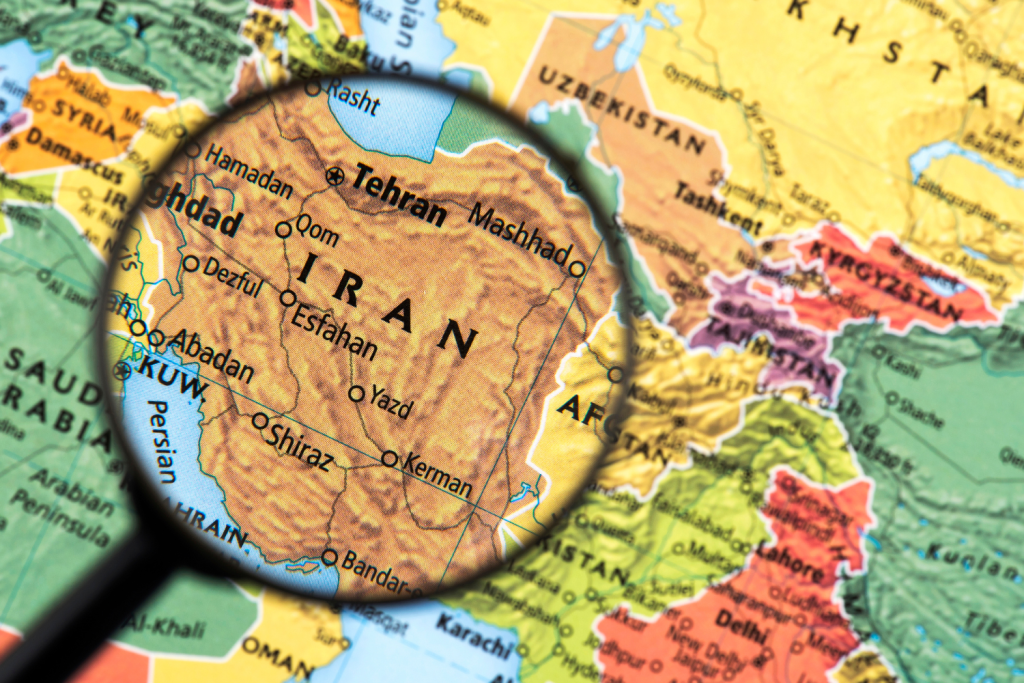
“The Iran Nuclear Deal was flawed from the start. Firstly, the agreement does not address Iran’s development of ballistic missiles. Secondly, the agreement contains a sunset clause that effectively at the end can be used by Iran for development of nuclear weapons regardless of the agreement. A future nuclear deal should address the following elements: […]
The Dangers and Challenges of Autonomous Weapons

“Why should Europe ban the Killer Robots? Although there is some disagreement about what lethal autonomous weapons systems really mean, it is possible to say that the phrase refers to weapons systems with autonomy in its critical functions. Weapons systems that are able to choose and attack targets on their own without human intervention. They […]
Russia’s War of Aggression: The Norwegian Response
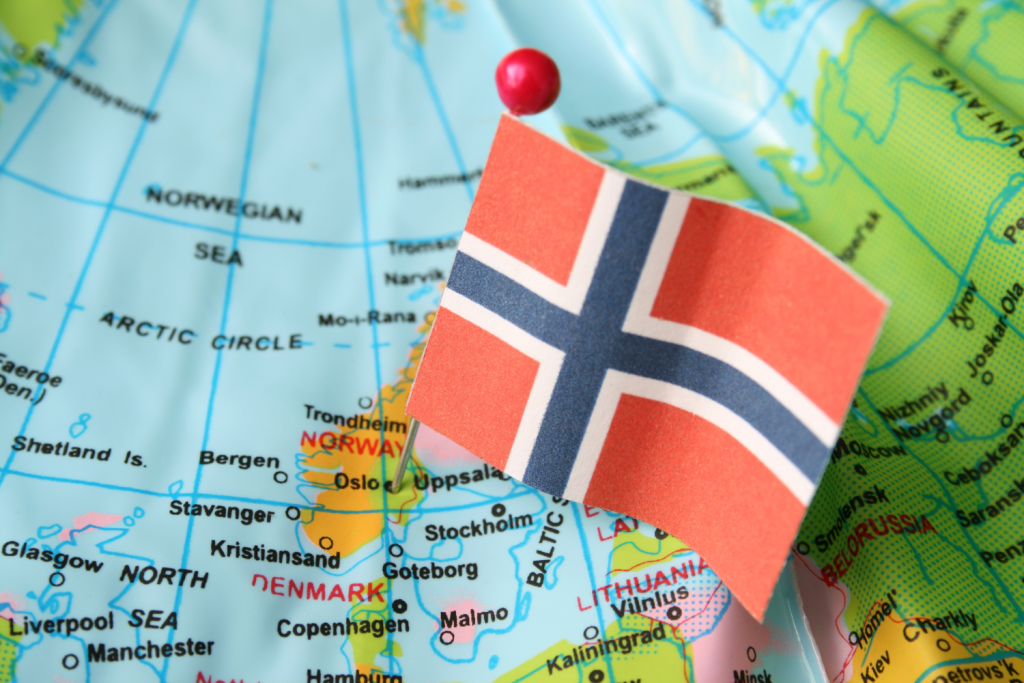
“The balancing act between deterrence, reassurance and engagement that has been defining for Norway-Russia relations, is now under pressure and difficult, if not impossible to pursue in the current context. This approach has been determined by four structural factors. First, the geographical proximity and a long common border, the asymmetry of the relationship with regard […]
Global Gateway: the EU’s New Connectivity Strategy

“We Europeans all know what connectivity is all about. It’s really in our DNA. Our infrastructures liaise us, and in our youth, the chances are we’ve been travelling by train via Interrail, or we have studied abroad thanks to an ERASMUS programme. We don’t have roaming charges when using the phone in another EU country, […]
Digital Rights in the European Union

If our whole life turns digital, then what happens with those people who do not have access to the digital environment? Maybe they don’t have a computer, they don’t have access to the internet, or they ae not digitally literate? In this video, Susana de la Sierra (Associate Professor, University of Castilla-La Mancha) examines the […]
Digital Trade Integration: Global Trends

“We need more empirical research to inform policy makers when they do regulation on digital trade. This is important because these policies need to achieve their objectives, so they need to protect privacy and security of citizens, but also we have to avoid that these policies become a restriction for companies or on an open […]
Regulating EU Exports: Dual-Use Items and Global Security

“A review of the EU’s Recast Regulation on dual-use items shows rising concern for the misuse of cyber-surveillance technologies (e.g., artificial intelligence, emerging technologies) by third countries, while also recognising the need to promote R&D competitiveness. This policy Brief analyses the balance struck between the economy, technological innovation, and human rights in the Recast, focusing […]
The ‘Double Crisis’ for EU Energy Security

“What is the double crisis? The first issue has to do with the geopolitical situation: Russia’s invasion of Ukraine has finally made the EU understand that Russian energy is a form of power and that Russia has used this power before. In the context of the Ukraine war, energy has even become a weapon, putting […]
Malta-Russia Relations & the Libyan Civil War

“In 2021 with the creation of the National Government of Unity and the fact that both Malta and Russia now are backing the same government, the relationship thawed, and in fact Malta allowed the seized Dinar to be sent, to be unconfiscated. However there does not seem to be much incentive to prioritise Malta-Russia relations […]
Conflict & Compromise: Turkey-Russia Relations and the West
“What is the relationship between Turkey and Russia? How does this relationship affect Turkey’s position within the EU? What should we expect in the future? And how should the EU and Turkey deal with Russia? Turkey’s stance in the Ukrainian war and its position in the Georgian conflict can be seen as a strategy to […]
Should Autocratic States be Expelled from the EU?
“The problem of democratic backsliding in European politics is a problem which has now some history. Should autocrats be expelled from the European Union? The question of what to do about autocratic Member States is not inevitably constrained by the idea that Member States’ membership is entirely in their own hands, and that that is […]
EU-Russia Relations and the Future of Europe
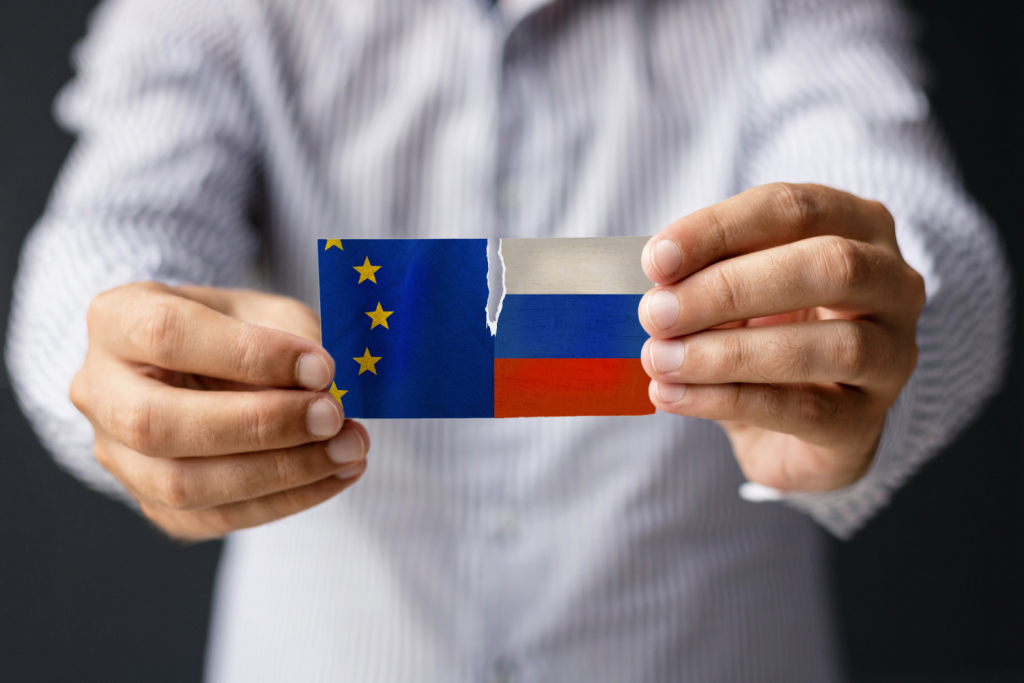
“The need for a comprehensive European strategy towards Russia [is clear]. Such a strategy needs to include a clear plan of how to put deeds behind words. It needs a plan of how to counter Russian propaganda efforts in the Balkans, how to develop a credible standing in world politics as Western liberal democracies. […] […]
Where Slovakia Stands on EU-Russia Relations

“Slovakia stands for obligations to the EU and supports the Ukrainian people and sovereignty of the country in the fight against Russia […] and especially today, there is no time for naïve memories for historical legacy, but rather for strong support we can express to Ukraine, we support by our international obligations. Slovakia stands behind […]