As European Union (EU) enlargement evolves increasingly into a geopolitical necessity, the inadequacy of the existing processes for integration of new Member States becomes ever clearer. Experts have long warned that the current pace and modality of EU accession is not fit for purpose as Europe is threatened by a volatile security environment, chiefly orchestrated by Russia and its proxies. However, treaty amendment, the key to redesigning enlargement, is a challenging and lengthy procedure even under favourable conditions, and hardly up to geopolitical speed. So, what is the solution?
During this event, leading experts in European affairs will outline possible solutions to the dilemma, discussing how the EU can optimise existing structures to enable enlargement without the need for treaty change. Building on the findings of the InvigoratEU report “Enlarging without Amending: Can the EU Act Fast Enough within the Current Treaties?”, the panel will assess how recent developments in enlargement policy, including the long-awaited release of the pre-enlargement policy reviews, are conducive to a smoother and more efficient accession process.
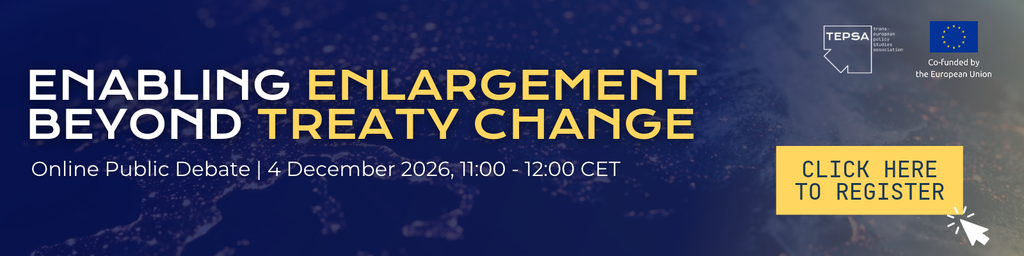
The discussion “Enabling enlargement beyond treaty change” will take place online on 4 December 2026 from 11:00 to 12:00 CET, featuring a moderated debate followed by discussion with participants.
The panel will feature:
- Funda Tekin, Director, Institut für Europäische Politik (IEP)
- Erik Jones, Director, Robert Schuman Centre for Advanced Studies
- Giselle Bosse, Professor, Maastricht University
- Mariam Khotenashvili, Executive Director, TEPSA