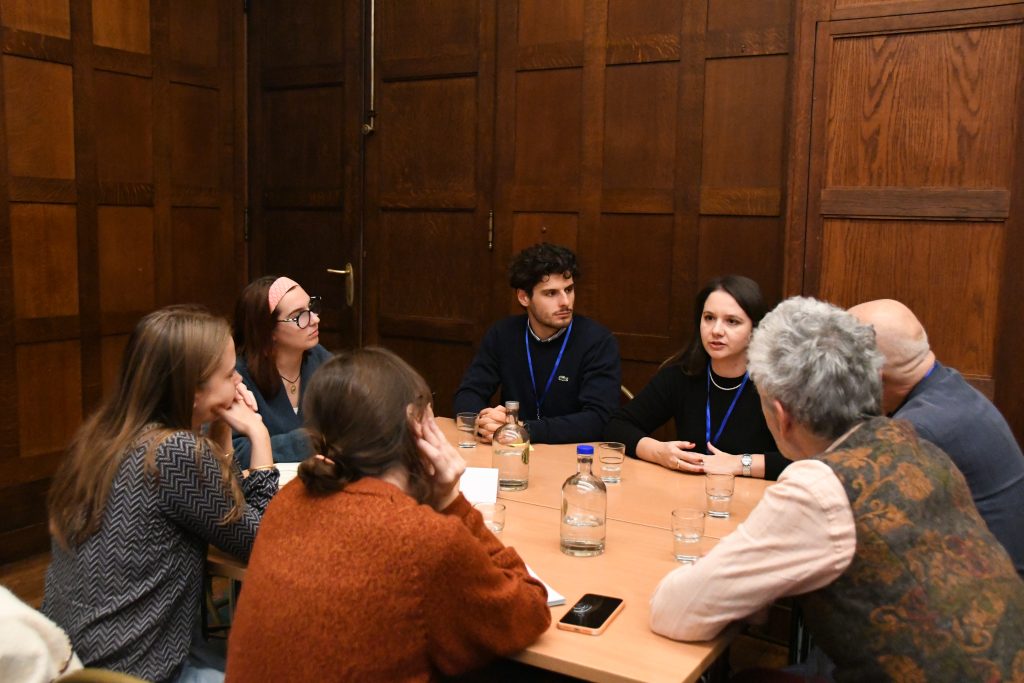
In the evening of 24 November 2025, the Trans European Policy Studies Association organised the interactive “Debating European Democracy” event, a closed-door discussion on some of the current challenges to democratic values and the rule of law faced by the EU and its Member States. The event was moderated by TEPSA’s Project Manager, Allegra Wirmer, and Communications Manager, Barbara Vanotti.
At a time of increasing erosion and backlash against democracy, this event was organised to provide a space for open and frank debate among citizens on the root causes, key issues, and possible solutions to the situation. “Debating European Democracy” was conceptualised starting from the belief that solutions and strategies to strengthen the democratic resilience can only be effective when they are a result of exchanges that include a diversity of citizens.


The discussion gathered representatives from a variety of different sectors, including academics and think tankers, policy-makers, civil society organisations, journalists and youth representatives. Using clips from TEPSA’s flagship audiovisual products, European Democracy Explained and the EuropeChats video series, participants discussed four different questions in roundtables, including democratic backsliding, online disinformation, enlargement, and the EU’s support for Ukraine’s integration.