As part of our activities in the framework of the InvigoratEU Expert Hub on EU Enlargement, on 4 November 2026, TEPSA organised the group’s sixth and final closed-door meeting with the support of Carnegie Europe. The meeting took place under the Chatham House Rule.
About the Expert Hub on EU Enlargement
The InvigoratEU Expert Hub gathers an exclusive group of distinguished EU and national policymakers and civil servants from the European Commission, EEAS, European Parliament, Council Secretariat, Permanent Representations and current/upcoming Presidencies of the Council of the EU, who work on EU enlargement and related issues.
It is created in the framework of the Horizon Europe project InvigoratEU – “Invigorating Enlargement and Neighbourhood Policy for A Resilient Europe”, which sets out to explore how the EU can invigorate its enlargement and neighbourhood policy to enhance Europe’s resilience.
Between 2024 to 2026, TEPSA has organised a series of closed-door discussions to bring together Expert Hub members and researchers from the InvigoratEU project. These meetings provide a forum for a structured dialogue about key research findings and policy advice on EU enlargement. Selected members of the Expert Hub are invited to each meeting based on their specific expertise and its relevance to the topics discussed and can provide feedback and insights into the research process.


Objectives
The political timetable of the EU Enlargement and the institutional timetable of the EU have fallen out of sync. Ukraine’s wartime accession bid has made the cost of delay more immediate, whereas the Western Balkans have spent years moving through a process in which progress can still be halted by an individual Member State. Chaired by Richard Youngs ( Senior Fellow, Carnegie Europe and TEPSA Board Member), the meeting explored how accession could be accelerated without changing the EU Treaties, and what safeguards would be needed to manage the risks of future enlargement.
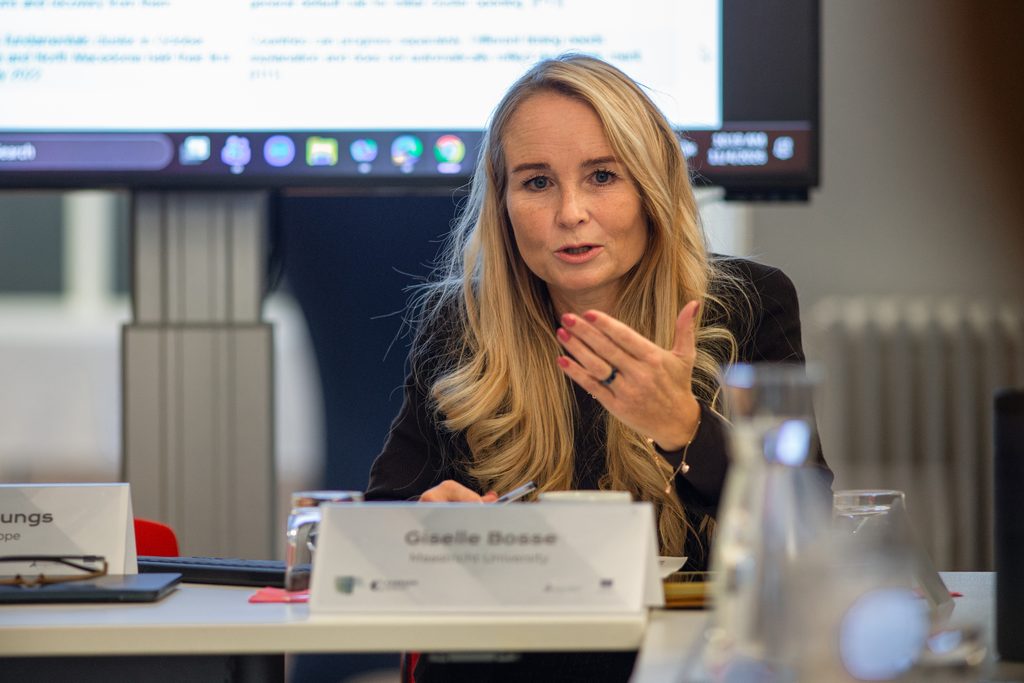
In the first part of the meeting, Prof Dr Giselle Bosse (Full Professor and Jean Monnet Chair, Maastricht University and TEPSA Board Member) examined how accession can be sped up within the current Treaties reflecting on InvigoratEU findings and presenting her proposal for a Council Loyalty Code grounded in the duty of sincere cooperation. During the second part of the discussion, Prof Dr Funda Tekin (Director, Institut für Europäische Politik and Scientific Lead of InvigoratEU) drew on the project’s findings and her extensive expertise to explore the emerging debate on safeguard clauses and transitional provisions in future accession treaties.

Here’s what emerged from the discussion:
- Keep it simple for candidate countries. The accession process is already enormously complex. Taking Ukraine as a case in point, participants highlighted the administrative and legislative demands placed on candidate countries, and questioned whether introducing additional procedures would make accession more manageable or further complicate it.
- Make progress more predictable. Clearer accession roadmaps and tangible rewards for reforms could help maintain momentum. Participants also discussed opportunities for earlier participation in EU policies and institutions, using instruments already available under the existing Treaties.
- Safeguards should strengthen trust. Gradual integration and transitional arrangements are already part of the EU’s enlargement experience. However, participants raised important questions about how to ensure that new members enjoy equal rights and that safeguards do not create perceptions of second-class membership.
- Credibility is essential. Bilateral disputes, inconsistent messaging and uncertainty about the benefits of gradual integration can undermine confidence in the enlargement process. Participants emphasised the importance of clear communication with citizens in both candidate countries and EU Member States.
- The case for enlargement goes beyond security. While geopolitical considerations have brought renewed urgency to enlargement, participants highlighted the importance of communicating its benefits in terms of prosperity, democracy and shared values.