Europe is confronted by a structural shift in the geopolitical landscape, which exposes its vulnerabilities and fosters uncertainty about the future of its security and defence policy. Questions of resilience, rearmament, strategic autonomy and independence have moved to the centre of political debate across the European Union (EU) and beyond.
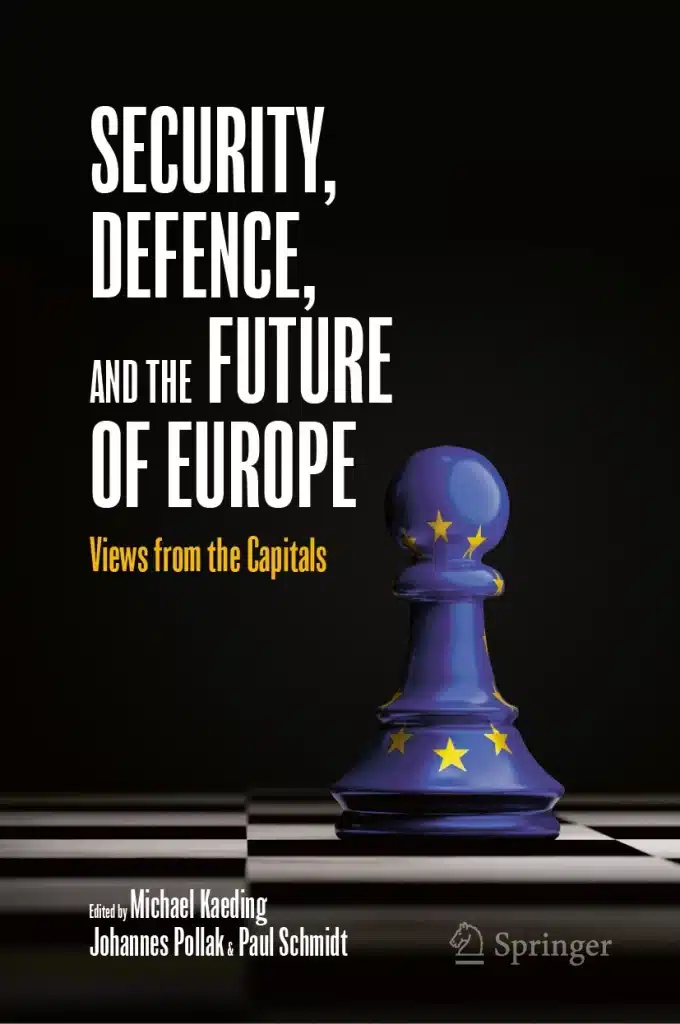
TEPSA’s book “Security, Defence and the Future of Europe: Views from the Capitals”, edited by Michael Kaeding, Johannes Pollak, and Paul Schmidt, compiles domestic perspectives on these questions from leading European experts. It examines the past, present and future of security and defence on the continent. 42 national chapters bring comparative, concise and accessible analyses and policy recommendations covering issues ranging from military preparedness and defence spending to public opinion, neutrality, hybrid threats, NATO cooperation, and the war in Ukraine.
The book is introduced by a foreword penned by European Commissioner for Defence and Space, Andrius Kubilius.
Published by Springer Nature in 2026, the book also reflects TEPSA’s longstanding commitment to fostering informed debate on Europe’s future through pan-European dialogue and expert analysis.

The book series “The Future of Europe: views from the Capitals” is one of TEPSA’s flagship activities. These collections of short chapters, published every year, analyse topical European issues from the perspective of each EU Member State and neighbouring countries, and help understand the future of the European project. The series is edited by Michael Kaeding, Johannes Pollak and Paul Schmidt, and showcases chapters written by researchers from the TEPSA network and beyond.